5 Brands taking physical retail to the next level
In-store shopping still drives more sales than online – and a growing number of brands are reinventing the experience in response
Add bookmarkListen to this content
Audio conversion provided by OpenAI

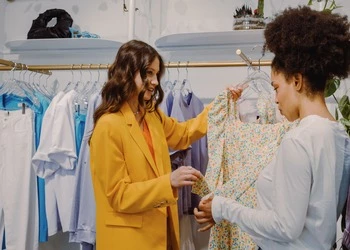
In a world where digital-first and AI-first customer journeys dominate, it's easy to forget that physical retail makes up the largest share of monthly sales.
Data on US consumer habits shows that around 80 percent of all retail sales occur in store. Meanwhile in Europe, ecommerce accounted for only 16 percent of all retail sales in 2024. This figure is expected to increase to 20 percent by 2029, still physical retail will grow at around 0.6 percent over the next five years.
Naturally, brands big and small are looking to innovate their offline shopping experiences and provide experiences that drive sales in the short-term and loyalty in the long-term.
This article rounds up how five brands are re-writing the rules on in-store shopping and delivering a new experience to customers.

Don't miss any news, updates or insider tips from CX Network by getting them delivered to your inbox. Sign up to our newsletter and join our community of experts.
Deisel: In-store VR and AI
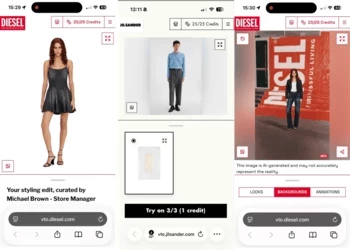
OTB Group, the parent company of Diesel, Jil Sander, Maison Margiela, Marni, and Viktor&Rolf, is rolling out a new Virtual Try-On experience that allows shoppers to visualize exactly how specific items will look and fit on their own bodies in a bid to tempt them in store.
The new experience brings omnichannel commerce into the AI age. The aim is to leverage AI to drive footfall to brick and mortar stores via "high-quality AI visuals" that will inspire prospective customers to "experience the products firsthand".
This isn't about replacing one channel with another, but truly leveraging the benefits digital to drive customer connections IRL.
OTB Group says the experience will deliver "a sophisticated, high-touch service that transforms standard interactions into highly customized experiences at scale", while building closer client relationships.
Primark: App-based shopping that takes the journey in store
The recent headlines from Primark (Pennies in its native Ireland), have focused on its separation from ABF and its new stores in Dubai and New York. However, behind the scenes, Primark has also been working to innovate the instore shopping experience with a multi-million-euro store refurbishment program and an app.
A proud pioneer of the physical store, Primark is in no rush to embrace ecommerce. Even during the Covid-19 pandemic, it chose not to introduce online shopping, despite many retailers depending on ecommerce to stay afloat. It wasn't until 2022 that Primark introduced click and collect services and in 2025 it launched a consumer app.
Initially launched in Ireland and Italy, the Primark app allows shoppers to browse a wide range of products, check in-store stock availability in real time, and stay up to date with the latest products and collections.
Shoppers can also save curated favourites and use the store locator function to plan their visits. They cannot, however, purchase items. This brave USP drives footfall to Primark stores where customers can either have a more efficient physical shopping experience, or impulsively splurge far more than they intended.
Aldi: A unified global store format
In Q2 2026, the UK and Ireland became the first operating territories where Aldi South Group introduced a new store design. With a plan to unify how its global grocery chain looks and feels, Aldi is adopting a modular model to fit different store footprints and layouts while retaining common features and branding. Supporting the re-design of physical stores, the full upgrade will cover tone of voice, signage, wayfinding, ticketing, packaging and uniforms.
Trials of the format began in Aventura, Florida, in September 2025, with further testing continuing in the US this year. Other territories to receive the upgrade include Australia, Germany, Austria and Slovenia.
The concept was created by Landini Associates and follows a 14-year partnership between the design consultancy and Aldi South Group.
Clintons Cards: Aisles customers can fit down
In 2025, UK greeting card chain Clintons unveiled a new concept store format it is slowly rolling out across its footprint of physical stores in the UK. Greeting card stores have doubled down on CX by expanded their product range in recent years, adding party essentials and gifts, such as candles, soft toys and photo frames.
Clintons has done all this and more. The new format is based on an "enhanced shopping experience", which includes updates fixtures, wider aisles, and expanded "gifting zones", as well as a new card writing station.
Part of the specialist multi-channel retail sector, the greeting card industry is booming, but has faced stiff competition over the last decade from online-only retailers like Funky Pigeon and Moonpig, which specialize in highly-personalized products and digital CX.
To compete, Clintons has realized that it needs to upgrade the traditional retail experience of narrow aisles and bright lights, while also helping customers with practical tasks, such as writing messages in the cards they buy.
The brand's trading director, James Taylor said: "This new store design marks an exciting step forward for Clintons, creating a modern and interactive shopping experience for our customers. With a complete overhaul and relaunch of greeting cards, an expanded gifting range, and exclusive product offerings, we believe our customers will love the refreshed store."
See how the Glasgow store looks in this Instagram post.
John Lewis: Creating a place customers want to be
The Glasgow branch of John Lewis will be one of five to benefit from a store makeover this year, along with Cambridge, Leicester, Reading and Liverpool. However, the Glasgow store's upgrade will be the biggest of the five with more than £20 million of a £50 million budget ringfenced for the 28,000sq meter store. The first five store upgrades are part of a wider £800m brand transformation, which will eventually see investment made across all 36 of JLP stores.
Managing director Peter Ruis says the upgrade isn't about change, but leaning into how customers use the stores.
He says: "Whether customers shop with us online, in our shops or across both, they expect the same trusted advice, service and experience. We're continuing to invest across our estate so our shops reflect the things customers value most about John Lewis, expert guidance, inspiring products and the confidence to make the right choice.
"These investments are about more than just a fresh look. They are about creating places where customers love to spend their time. The response from customers to the improvements we've already made gives us confidence to continue investing for the long term."
The investment follows the 2025 launch of a VIP shopping lounge for loyalty members at the flagship London store on Oxford Street, London. The trial allowed shoppers to enjoy free food and drink alongside a massage as they take a break from shopping.
The lounge had capacity for 30 guests and open to walk ins or, for those who want to secure their visit, places can be booked in advance.
Rosie Hanley, the brand director at John Lewis, was quoted as saying at the time: "Our new John Lewis Lounge is about rewarding loyalty with a premium experience. This trial is a perfect example of our wider strategy investing in our stores to offer unique, service-led experiences that our customers can't get anywhere else."
Quick links
- The new frontline of retail CX and how AI is shaping customer communications
- How AI is changing physical retail
- Secret Sales expands across Europe with H&M's Afound acquisition