CX isn't in crisis. It's having its finest hour
Major transformations SaaS are making it look like CX is being absorbed, but as Sue Duris writes, it’s moving to where it should have always been
Add bookmarkListen to this content
Audio conversion provided by OpenAI

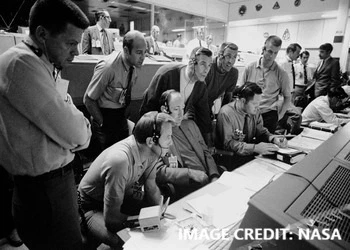
There's a moment in Apollo 13 when a NASA official, watching the mission go wrong, says, "…be the worst disaster NASA's ever experienced". Gene Kranz, the flight director, replies: "With all due respect, sir, I believe this is gonna be our finest hour."
That's how I think about what's happening to CX right now.
Lately, I keep hearing that CX is in crisis. CX Network put the question directly – crisis or change? – and I keep hearing the same worries echoed: that CX is being saturated, absorbed, or quietly folded into another team. But this isn't happening in a vacuum.
The broader picture is that artificial intelligence (AI) is reshaping everything around us, it's speed at scale, and CX can no longer be just about reporting. It's reporting plus outcomes. What insights did the metrics reveal? What did you do with them? And what impact did it have on the customer's business?
The deeper shift is that SaaS is evolving – and by association, so is CX. Add economic uncertainty to that, and the question sharpens: what is CX actually doing to protect revenue, reduce cost to serve, and mitigate risk?
And because of this evolution, the buyer is moving upstream. Enter the CRO, the COO, the CFO.
This isn't a crisis. It's an evolution – and like Kranz, I'd argue it could be CX's finest hour.

Don't miss any news, updates or insider tips from CX Network by getting them delivered to your inbox. Sign up to our newsletter and join our community of experts.
It started in SaaS
The pressure is real and visible. Forrester has called it a "SaaS-pocalypse" – in a matter of days, more than US$1 trillion in software market cap was erased, as investors bet that AI agents will fundamentally reshape how work gets done. The "death of SaaS" narrative is overstated – the enterprise core isn't vanishing – but it is transforming, and the transformation is reaching the people who work closest to the customer.
It's showing up first in customer success. AI is squeezing the CSM role from both sides – toward commercial on one end, technical on the other. Many CS leaders are concerned the function is getting compressed.
But this isn't AI "taking" the job. It's AI commoditizing the routine parts of it – the reporting, the status updates, the low-judgment work – and forcing the role to justify itself higher up, in terms of outcomes and revenue. CS leaders are right to be asking where they go next.
Here's why it matters beyond CS: this squeeze is the leading edge.
The CX layer: The squeeze reaches CX leadership
The same force compressing Customer Success is now reaching CX leadership itself – the CCO, the dedicated CX function. In some organizations, CX is being quietly folded into CS, or handed to product teams. But that's a flawed move, because they're different functions: CS owns the account and the product the customer bought; CX owns the whole relationship – every touchpoint, every channel, the journey the customer is actually experiencing. Renaming CS as CX doesn't build CX capability. It just gives the gap a new title.
Let me be honest about what's new here and what isn't. CX leadership roles have always been vulnerable – while it looks like CCO roles have been diminishing, they've evolved or been absorbed into broader operational or growth functions. But, to be fair, only about 10 percent of Fortune 500 companies have a dedicated chief customer officer. What's changed is the force driving the change and how broadly it's spreading. This isn't a one-off; it's accelerating.
And it's not all one direction. Some organizations are doing the opposite – elevating CX, giving it more commercial weight, not less. So, this is pressure and elevation at once: two faces of the same upstream shift.
You can see the model being forced to change in the market itself. In May, Qualtrics closed a $6.75 billion acquisition of Press Ganey Forsta – and notably, the deal nearly stalled when banks pulled a $5.3 billion financing package amid investor fears that AI would make much enterprise software redundant. Even the consolidator winning the race felt the AI pressure. And the logic of the deal says everything: Qualtrics itself framed it as a move beyond the traditional model of collecting feedback and reporting scores after the fact – toward AI that turns signal into action. The message is clear. Feedback-collection-and-reporting isn't enough anymore. That's not just a vendor problem. It's a mandate for what CX leaders now have to deliver.
Which raises the real question. The economic buyer has moved upstream – increasingly the CRO, COO, and CFO. And they don't buy reports. So when CX leadership compresses and decisions move up, who actually owns the customer experience?
It might look like CX is being absorbed. But really, it's relocating to where it was always meant to sit – deep inside the commercial core: revenue growth, cost containment, risk mitigation.
Who owns the cross-journey experience?
So far this is a story about what's happening to CX as a function. But if you're a CRO, COO, or CFO signing off on the org chart, here's where I'd slow down – because the real question isn't a headcount question. It's an ownership one.
When CX leadership compresses and the work gets absorbed into CS or product, something quietly goes unowned. Done well, CS owns the account – adoption, renewal, retention. That's commercial, outcome-driven work. But it's oriented around the product the customer bought and the account that holds it. CX is oriented around the whole relationship – every touchpoint, every channel, the signal the customer is sending across all of it. Not "are they using what they bought", but "what do they actually need, and where is the journey quietly breaking".
That's a difference in scope and orientation, not seniority. And as SaaS shifts from product-led to customer-led growth, scope is exactly the thing now showing up in revenue, retention, and churn risk.
I heard it from a SaaS org recently: "Our product people are handling CX." Maybe parts of it. But unanswered questions remain: who's reading the voice-of-the-customer signal across the journey, not just the product? Where are the journey gaps no single team owns?
These are important because of the trust factor. Trust tends to erode quietly, well before it shows up in the numbers – and by then it's a renewal problem, not a CX one. That unowned space – the cross-journey signal, the needs no single team is tracking – is the gap. And the cost of leaving it unowned shows up exactly where the C-suite is watching: revenue you fail to protect, cost-to-serve you fail to reduce, risk you fail to mitigate.
This is why the ownership question matters more than the org chart. You can compress the roles. You can move the decisions upstream. But someone still must own the whole-relationship experience – or it falls into the gap between functions, and you pay for it later, when it's expensive.
AI isn't the threat – it's the path
Here's the reframe that matters most. AI isn't taking CX's jobs. It's exposing which parts of that job were always commodifiable – the dashboards, the survey administration, the after-the-fact reporting – and forcing CX toward where it actually creates value: translating customer insights into commercial outcomes, owning the cross-journey experience, and governing how AI gets used in the customer relationship.
That's not a loss. It's a clarification. The work that disappears was never the work that mattered. What's left is the work that does.
For CX leaders, that means three shifts:
- Stop thinking in CX metrics: Start thinking in business outcomes. Revenue protected, churn prevented, cost-to-serve reduced. That's the language the new economic buyer speaks. NPS doesn't fund programs. Business cases do.
- Stop presenting CX programs: Start focusing on presenting business cases. The CRO and COO don't fund programs. They fund outcomes with a number attached and a named owner who's accountable. If you can't put a number on it, it won't get funded.
- Stop waiting for a seat at the table: Start earning it in their language. The seat was never given. It was earned by whoever could connect customer insight to commercial performance — explicitly, quantified, and repeatable.
And for the C-suite, the choice is just as clear. Build the ownership in – someone accountable for the cross-journey experience, in commercial terms – and you protect the revenue, retention, and trust that experience drives. Let CX dissolve into the gaps between functions, and you pay for it later, in churn and risk.
So no, CX isn't in crisis. It's evolving.
The CX that emerges from this is more commercial, more owned, and more essential than the version being mourned – but only if the C-suite designs for it – embedding CX where it was always meant to sit, deep in operations and growth, rather than letting it fall away by accident.
Which brings me back to Gene Kranz. Faced with what everyone else called a disaster, he saw the moment differently. CX is at that moment now. Handled well — owned, translated into the language of the business, governed with intent — this isn't the end of anything. It's CX's finest hour.
Quick links
- CX under pressure: New tech, new threats, new mandate
- The silent CX crisis – who gives a damn?
- AI Is exposing the CX authority gap
Mastering CX: AI Agents 2026
Register now for Mastering CX: AI Agents 2026 for an immersive experience where you'll get hands-on exposure to AI agents in action.
Register Now