Ryanair’s £8 family seat fee flies into regulatory headwinds
A CMA drip-pricing probe into Ryanair's “mandatory family seat” charge adds to a lengthening list of European regulatory clashes for the continent’s biggest budget airline
Add bookmarkListen to this content
Audio conversion provided by OpenAI

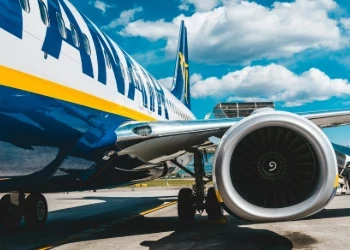
A CMA drip-pricing probe into Ryanair's "mandatory family seat" charge adds to a lengthening list of European regulatory clashes for the continent's biggest budget airline.
The UK's Competition and Markets Authority (CMA) has opened a formal investigation into Ryanair over the fees parents must pay to guarantee a seat next to their children, in what could become the regulator's next major test of its powers over hidden charges.
Announced on June 11, the investigation centers on Ryanair's "mandatory family seat" charge, which applies whenever a child aged between two and 11 is traveling with an accompanying adult. Ryanair's terms and conditions require an adult to sit beside the child, but only a paid, reserved seat guarantees this placement.
The CMA says the charge typically costs around £8 each way, with reserved seats across the airline's network between roughly £4 and £13.50, and that the policy applies across the majority of Ryanair's UK routes. Ryanair carried around 60 million passengers to, from, and within the UK in 2025, giving a sense of the scale of the bookings the policy potentially touches.

Don't miss any news, updates or insider tips from CX Network by getting them delivered to your inbox. Sign up to our newsletter and join our community of experts.
What exactly is the CMA looking at?
The regulator is examining two related questions. The first is whether the mandatory family seat charge amounts to an "unfair" contract term under UK consumer law, given that it may effectively require parents to pay extra so the airline can meet its own obligations around seating children safely next to a responsible adult.
The second is whether the fee is properly disclosed in the headline price or only becomes visible later in the booking journey, a practice known as drip pricing that was outlawed under the Digital Markets, Competition and Consumers Act 2024.
Hayley Fletcher, the CMA's director of consumer protection, has framed the investigation as part of a year-long push on pricing transparency, warning that businesses that fail to show the total price upfront can expect enforcement action. The CMA has stressed the investigation is still at an early stage and that no conclusion has yet been reached on whether Ryanair has broken the law, with an update expected within six months.
How Ryanair compares with other UK airlines
Part of what has caught the CMA's attention is how isolated Ryanair's approach appears to be. According to the regulator, British Airways, easyJet, Jet2, TUI UK and Virgin Atlantic all seat children automatically next to an accompanying adult during booking, at no extra cost, and Ryanair is described as the only sizable airline operating significant UK routes that charges specifically for this.
While seat selection is optional for most passengers who can otherwise be allocated a free randomly selected seat, that option effectively disappears for an adult traveling with a child in the two-to-11 age bracket.
Consumer group Which? has welcomed the investigation, with Which? travel editor Rory Boland saying the organization has long flagged Ryanair's approach to splitting up families unless parents pay to sit together. The comparison with rival carriers is likely to be central to the CMA's fairness assessment, since it suggests the additional cost is not an unavoidable feature of operating a low-cost airline, but a Ryanair-specific policy choice.
Ryanair's response: "Bogus" and political
Ryanair has rejected the CMA's framing entirely. A company spokesperson said the airline "DOES NOT charge any fee for children to sit beside their parent," arguing that only the adult pays a reserved-seat fee, while up to four accompanying children can be allocated adjacent seats free of charge on the same booking. The airline has called the investigation "bogus" and said it looks forward to disproving the CMA's claims.
Notably, Ryanair's pushback has also taken on a political dimension. The airline framed the probe as a distraction tactic by the UK government, suggesting that ministers are keen to appear consumer-friendly while leaving air passenger duty - a tax Ryanair has long campaigned against - untouched. This combative, politically charged style of response is becoming something of a signature for the airline when it comes under regulatory pressure.
Not Ryanair's only regulatory headache
The CMA probe is the latest in a string of run-ins between Ryanair and competition authorities across Europe. In December 2025, Italy's competition authority, the AGCM, fined Ryanair €256 million for allegedly abusing a dominant market position by making it difficult for travel agencies to sell its flights, particularly in combination with other carriers' services or bundled holiday products. Ryanair branded that ruling "legally flawed" and "absurd" and has lodged an appeal, with chief executive Michael O'Leary going so far as to say the regulator "cannot be trusted."
In the UK specifically, the CMA's action against Ryanair follows its first-ever financial penalty under the new Digital Markets, Competition and Consumers Act regime: a £4.2 million fine and £760,000 in refunds levied against the AA and BSM driving schools earlier this year for adding a £3 booking fee only at checkout. That case was part of a broader sweep in which the CMA wrote to 100 businesses about pricing transparency and opened investigations into a further eight, including StubHub, Viagogo, Gold's Gym and Wayfair, with additional probes into companies such as Autotrader, Just Eat and Feefo still ongoing.
Set against that backdrop, and given that breaches of the new consumer law regime can carry fines of up to 10 percent of a company's global annual revenue, Ryanair's exposure here is far from trivial - even if, in cash terms, any eventual penalty would be small relative to the airline's overall size.
Why ancillary fees matter so much to Ryanair's business model
Understanding why Ryanair defends charges like this so vigorously requires looking at the numbers behind its business model. In its most recent full-year results, Ryanair reported ancillary revenue - income from sources such as seat selection, baggage and priority boarding - of just under €5 billion, equivalent to roughly £24 per passenger and around a third of total group revenue.
That income stream has been growing faster than ticket revenue in recent years and is central to how Ryanair keeps headline fares low while remaining very profitable. Any regulatory ruling that forces a rethink of how family seating fees are charged or displayed therefore touches a meaningful part of the airline's commercial architecture.
Why this matters for customer experience
The case lands at a moment when transparency and trust are climbing the customer experience (CX) agenda more broadly. CX Network's 2026 research into the state of CX, CX Horizons, found that consumer demand for data security and transparency is now the fifth most significant challenge facing CX teams, with consumer privacy ranking as the tenth most selected CX trend overall.
Pricing transparency also looks set to become the next frontier of the trust conversation. The CMA's enforcement action against the AA and BSM driving schools showed that even a £3 fee can trigger refunds, fines and reputational damage once a pattern of non-disclosure is established.
For Ryanair, an airline that has weathered repeated controversies over family seating since at least 2016, the CMA's intervention adds fresh regulatory risk to what has long been a recurring source of customer frustration, while its parallel battle with Italian regulators suggests a broader pattern of friction with European competition authorities that goes well beyond this one fee.
Whatever the outcome, the investigation is a reminder to CX and pricing teams across sectors that "mandatory" fees tied to safeguarding, accessibility, or family travel are likely to attract particular scrutiny, both from regulators tightening their grip on drip pricing and from customers who increasingly expect the full cost of booking to be clear from the very first screen.
Botpress - The realities of using AI agents for the helpdesk

This CX Network report explores how practitioners are overcoming the three challenges of AI agent integration. Featuring insights from workforce, service and product specialists at Roche Pharmaceuticals, LG Electronics, PowerPay, J.P. Morgan Chase & Co., New York Life and Botpress, as well as a case study from Super Dispatch, it explains how to build for complex tickets and real-world scenarios, how to reduce overheads without reducing headcount, and how to implement the guardrails that are essential to success.
Download NowQuick links:
- Europe ushers in machine customer era as AI agents buy coffee and concert tickets
- ASOS launches fashion app in ChatGPT
- Qualtrics closes Press Ganey Forsta deal for $6.75bn