Bridging the value gap: A Saas CTO explains why your tech isn’t driving value
Author and CTO Rodney Hobbs explains why so many organizations aren’t getting the value they were promised from major platform investments
Add bookmarkListen to this content
Audio conversion provided by OpenAI


Here's the problem statement: most organizations aren't getting the value they were promised from major platform investments.
These are not small investments. Gartner says end-user spending on artificial intelligence (AI) platforms and models could reach US$64 billion this year; a 63.4 percent year-on-year increase. As CX Network's research into the state of CX found, the top investment priorities for CX this year include AI agents, automation and data insights and analytics.
The value problem is putting pressure on organizations, teams and individuals across business. As explored in this CX Network report, CX practitioners must establish new ways to assess value and measure returns in order to secure the budget required to drive innovation. Among IT professionals, recent research found 81 percent of global executives say AI "failure" in all its forms puts their career at risk.
For Rodney Hobbs, author of Bridge the Value Gap – and a former C-suite executive with Wipro, ServiceNow, VMWare and Fujitsu among others – the problem is universal, but the solution is all about "mindset, not toolset".
In this interview with CX Network, Hobbs talks about:
- The three things that go wrong during tech procurement in almost all organizations.
- The disconnect between a project's ambition and realization.
- A framework that practitioners can use to steer their procurement decisions.
- Six questions to put to vendors before any CX tech investment.

Don't miss any news, updates or insider tips from CX Network by getting them delivered to your inbox. Sign up to our newsletter and join our community of experts.
"Three things go wrong, in the same order, almost everywhere"
In writing Bridge the Value Gap, Hobbs drew on more than 30 years of experience as a CTO and chief employee experience transformation officer at major Saas and enterprise tech firms, including Wipro, ServiceNow, VMWare and Fujitsu.
Over the course of his career, he has seen hundreds of organizations deploy tools off the shelf without fully grasping the fact that business outcomes, operating models and ownership do not come in a box.
"Capability can be bought, but value can't," Hobbs says. "What turns that capability into a return is everything the vendor doesn't sell you: a clear business outcome, a redrawn operating model, and someone who actually owns the number."
According to Hobbs, when the focus is toolset rather than mindset, three things go wrong, "in the same order, almost everywhere".
First, the program starts from a technical requirement instead of a business outcome. This means nobody can articulate what "value" even means in dollars. Second, Hobbs says ownership is spread across a committee, "and value dies in committees; every successful program I've seen had one named person accountable end to end, what I call the Enterprise Super Glue".
Third, organizations treat go-live as the finish line, when Hobbs says it's actually the beginning. "Underneath all of it sits a quieter problem: the data layer. This data fabric is the layer most organizations never properly build, and it's the one that most determines whether the platform delivers. So the gap opens in the same place every time: between what was bought and what actually reaches the business," he explains.
A framework to overcome the most common challenges
Rather than lamenting the mistakes he sees occurring, Hobbs' book proposes a six-part framework which he says "turns value from something you hope for into something you manage, across six phases, with one principle running through all of them: business outcomes drive every decision".
Reflecting the journey from spending to value creation, the frameworks' acronym "bridge" also plays on the book's title.
Business Foundation: This is about defining the why before the how. Hobbs says three signed-off problem statements at C-level, and the value quantified the way a CFO would defend it: one number, one timeframe.
Requirements and scope: For this part, Hobbs says leaders must consolidate, standardize, simplify, and validate "every requirement against the platform standard rather than rebuilding old habits in new software".
Iterative design: Hobbs advises designing with the business as co-creators, not sign-off. "Get the data-quality decisions right early, because they're the costly ones to reverse," he says.
Deliver at pace: Hobbs says: "Working software every fortnight, with a deliberate configure-versus-customize call on every requirement."
Govern and change: This step covers the clarity about who decides what, and "go-live ready" defined in people terms, not system terms.
Embed and evolve: As Hobbs puts it, "go-live is the beginning, a funded center of excellence that treats every release as a business opportunity".
On how leaders can implement the framework, Hobbs says: "The first move is deliberately small: fill in a one-page Value Gap Canvas and capture a single baseline before anything is configured. You can't prove value you never baselined, and most programs never do."
The agentic AI investment disconnect
As outlined, CX Network's research found agentic AI to be the top investment priority for practitioners this year. However, many studies conclude most investments in the technology fail.
It's an expensive – but apparently universal – disconnect and Hobbs says the reason is that "ambition is set at the top layer and the failure happens two layers down".
He explains: "In the architecture I use, agents live at the experience layer, the front door everyone can see and demo. But an agent only creates value when it acts through the orchestration layer beneath it, and that layer depends on the data fabric beneath that – the exact layer most organizations haven't built."
This means an autonomous front door is bolted onto an estate that can't support autonomous action, and then it's all measured using the wrong thing: usage and sentiment – activity – instead of realized value in business terms.
"It's the old mistake in a new costume," Hobbs says. "It's a mindset problem before it's a technology one: people buy the agent as a toolset and skip the change to how work is actually decided, funded and owned. And value decays. A system genuinely delivering in March can be leaking by September while the dashboard still shows green, because the dashboard tracks activity, not value. The intelligence is rarely the limiting factor. The enterprise around it is," he adds.
The top questions practitioners should always put to vendors
Before committing to any enterprise tech investment, Hobbs says practitioners should ask questions of their vendors. And there are six questions he says a practitioner should never skip:
- What single business outcome does this change – as one number, over one timeframe – and would our CFO defend that number?
- How will we measure realized value, as distinct from usage and adoption?
- Which layers of our estate does this actually touch – and is our data foundation good enough to support it, or are we buying a front door onto an estate that can't carry it?
- What has to change in how we work, decide and fund – and who inside our organization owns that end to end?
- What happens to the value after go-live, and how will we detect decay before the next budget round does?
- Can you show a comparable customer's realized value, independently – not a reference call and a highlight reel?
He explains: "If a vendor can't engage honestly with those, that tells you something before you've signed anything."
Bridge the Value Gap – why most organisations aren't getting the value they were promised from major platform investments, and the framework to fix it
is available via Amazon and other retailers
Quick links
- The age of agentic loyalty: How Woolworths, Kmart and Bunnings are embracing the agents
- Why AI agents won't fix your decision-making (and 3 things that will)
- Operating model not business function: The paradox of the customer experience
CCW EU 2026
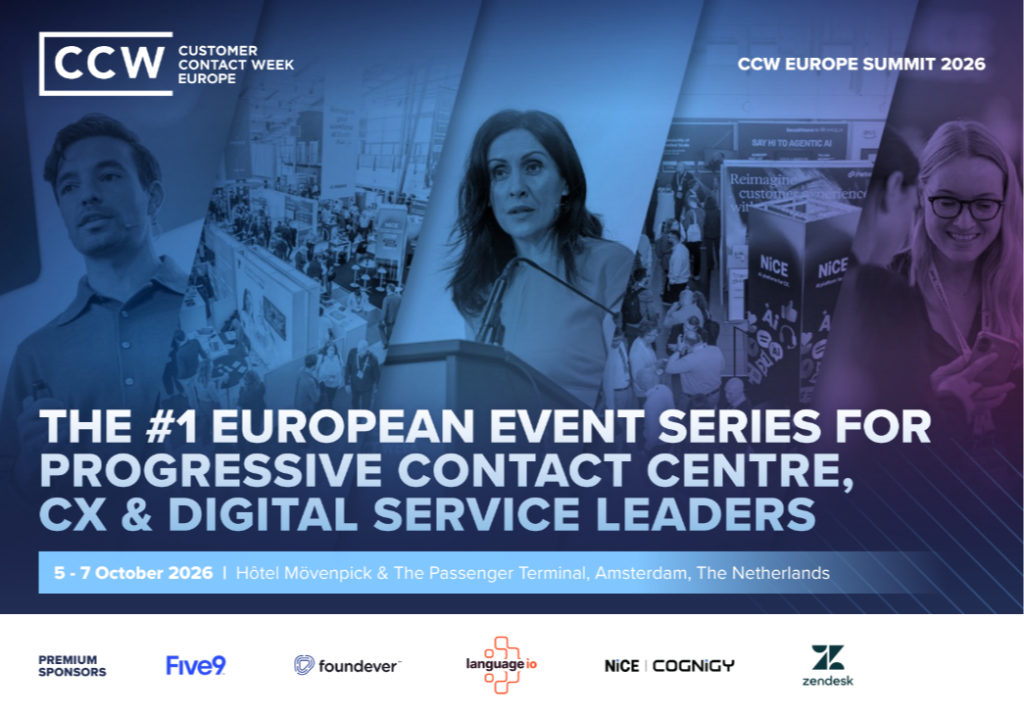
CCW Europe will explore how service is transforming from execution to a strategic driver of trust, insight, and value.
The agenda features over 250 world-class speakers, delivering actionable strategies, global best practices, and inspiring insights on AI, innovation, and customer-centric transformation. From the Failures & Fixes stage to international benchmarks, each session equips leaders to navigate this fast-paced environment and drive meaningful change.
Learn MoreImage Attribution
Image #1 - Photo by Alex Azabache on UnsplashImage #2 - Image by Alex Azabache for Unsplash