The Back Market story: Building customer trust in a low-frequency purchase category
Back Market’s Luke Forshaw explains how the company fostered customer trust – and drove record financial results – as a digital-first brand in a "trust-deficit" category
Add bookmarkListen to this content
Audio conversion provided by OpenAI


We know it's better for the planet, but in some categories, buying pre-loved is still perceived as risky. One of those categories is refurbished tech – and ironically, it's probably one of the biggest ways a consumer can reduce their environmental impact without making drastic lifestyle changes.
As the world's largest pure-play premium refurbished tech marketplace, Back Market allows people to buy professionally refurbished, quality assured technology and trade in their old devices.
The platform's core corporate values – known as the five principles of the Back Market saboteur – are about fighting against "fast tech", which Back Market describes as being "dominated by the overproduction and overconsumption of devices". In buying refurbished instead of new, Back Market customers can reduce their carbon emissions by 92 percent and help remove e-waste, which has increased 82 percent since 2010.
However, as noble as the cause is, Back Market has spent years re-engineering its end-to-end customer experience around one problem: convincing people that refurbished doesn't mean risky.
At All Access: Digital CX 2026, Back Market's director of brand and marketing Luke Forshaw told our senior event producer, Chloe Chappell, how Back Market builds trust in a category most customers only think about once every few years, how the company is changing the status quo on tech investments and marketing, and how that led to global expansion and record financial results.
You can watch the full interview on CX+
This case study highlights:
- How a digital-first brand in a low-frequency purchase category built trust through three methods
- How Back Market focused on the humans behind the digital brand
- How Back Market refined its UX to reflect customer needs, rather than internal KPIs.

Don't miss any news, updates or insider tips from CX Network by getting them delivered to your inbox. Sign up to our newsletter and join our community of experts.
The trust challenge: A digital-native brand in a low-frequency purchase category
For Back Market, the trust challenge had three primary threads:
- Customers typically only purchase new tech once every couple of years. In a world where most tech commitments are subscription or contract-based with customer support for the duration of the relationship, making an upfront investment in a refurbished item requires a leap of faith.
- Part of this is because not all customers are on board with digital-native CX and service propositions. Some find comfort in having the option to simply walk into a store if something goes wrong.
- Furthermore, Back Market can't rely on repeat-purchase habits to build familiarity. It has to earn trust from a near-standing start every time a customer shows up then build relationships through genuinely useful marketing contacts and additional service-based products that drive loyalty between purchases, not just at the point of sale.
In short, Back Market isn't just educating consumers on the blight of fast tech, but as a digital-first brand in a low-frequency purchase category, it's also flying the flag for seamless CX that shouldn't require post-sale support. Forshaw's team addressed these challenges on multiple fronts:
Fresh revenue streams: Not from tempting customers to buy more, but through a device trade-in service and an insurance-style protection product called Back Market Backup. These products keep the brand relevant between purchases without pushing customers to buy more than they need.
Deliberately paced marketing: Back Market doesn't do constant promotion. It runs two to three campaign "waves" per country tied to genuine moments, such as back-to-school, Black Friday, or the winter gifting period. Between these windows, the brand shows up through creator partnerships, always-on content such as battery health guidance or how to change a fuse, and CRM and social engagement that isn't tied to a discount code.
"The way that we promote ourselves through marketing is hugely important," Forshaw says. "It's about keeping the brand feeling relevant with what's happening in market and in culture, rather than just constantly pushing promo codes and new products to those that are already engaging and interacting with the brand."
Being present: Another key strategy is to prevent distrust simply by showing up; on major billboard and TV campaigns, magazine adverts and online. As Forshaw says, to audiences "this brand can afford this placement" means "this brand is established and safe to buy from".
Another method is through extensive UX testing on the site to ensure product condition grades are easily understood, pricing is perceived as competitive, and navigation meets customer expectations (more on this point below).
Creating a human brand
If distrust does show up – on social feeds or review platforms like Trustpilot – an in-house care team is tasked with responding, resolving the issue, and moving the conversation to a private channel. The same team is instructed to show up for positive moments too: reposting customer content, or occasionally following up a purchase with a small surprise gift, like an Apple Pencil after an iPad order.
Together, these measures help Back Market break through the faceless anonymity of the traditional online platform to remind its customer base that the organization is ultimately run by people – and those people can be trusted.
"We're basically just trying to open that dialogue with people... mitigate any concerns that people have with that by showing that the brand is human. We do have people that work here, we're legitimate," Forshaw says.
"Hopefully, over time, that should turn the perception of refurbished tech into something that the majority of people across the world see as a good alternative to buying new."
Still, Forshaws says it's a fine balance to strike. On the one hand, Back Market is trying to hit the "mid-funnel consideration quality metric perspective", whilst also driving performance at the bottom of the funnel and brand at the top.
"Finding that balance in every market where we operate based on maturity, market perception et cetera, is, yeah, it's a bit of a fine line to toe," he says.
The results: 17 markets, 32% increase in year-on-year GMV
The results from Back Market's extensive trust-building show up in many ways, not least the fact that the platform now operates in 17 markets and, in 2025, set a record for gross merchandise value (GMV), exceeding €3.5 billion (US$3.5 billion) and representing a 32 percent year-over-year increase.
On the website – the digital front door through which the majority of customers arrive – a renewed focus on UX saw increases in dwell time, average order value, and conversion rate. This meant that as traffic grew – as expected from broader company growth – engagement quality grew alongside it rather than being diluted.
The reason for this shift is focus was simple: UX friction is a trust problem.
Therefore, homepage design could no longer be decided by the KPIs of different teams. It had to be decided by what customers wanted to see. So, although the diversification team wanted the homepage to showcase category breadth, the seller team wanted to focus on the highest revenue categories, and the design and product teams each wanted their own initiatives foregrounded, none of those teams could negotiate their way to dominance.
There's much more to this story, from how Back Market ensures brand consistency across all 17 operating markets, to how different media environments are evaluated before the brand commits to being visible there.
You can watch the full interview with Luke Forshaw on CX+
Quick links
- Inside PowerPay: Using AI agents to amplify not replace humans
- How TikTok Shop cut ticket resolution time by 150%
- AddSearch upgrades UX as consumer search goes conversational
CCW EU 2026
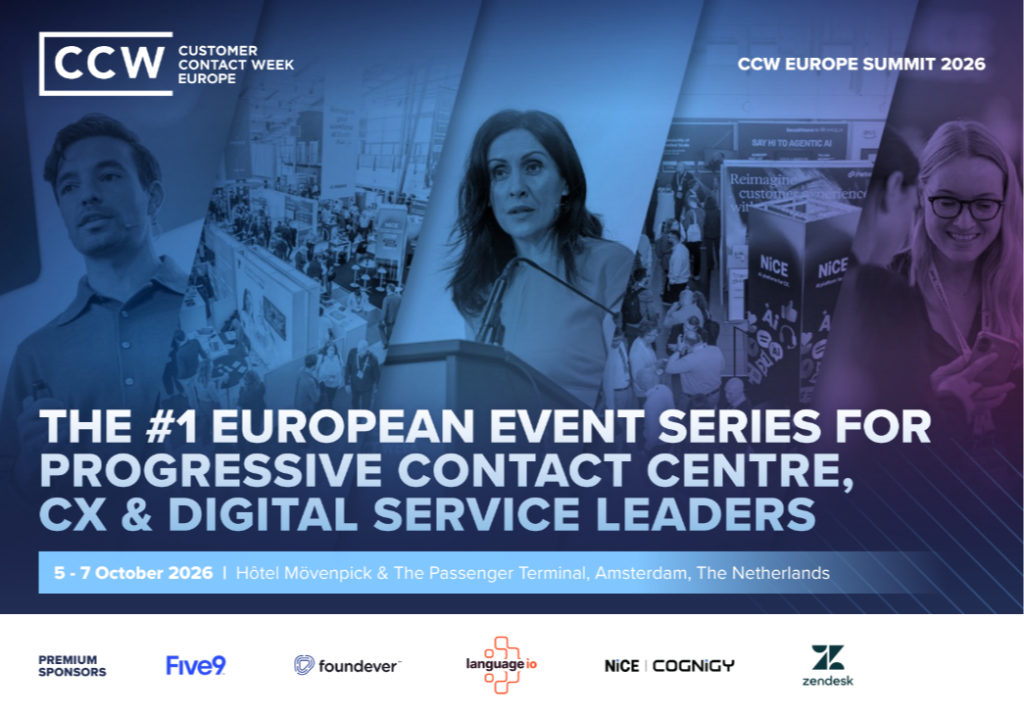
CCW Europe will explore how service is transforming from execution to a strategic driver of trust, insight, and value.
The agenda features over 250 world-class speakers, delivering actionable strategies, global best practices, and inspiring insights on AI, innovation, and customer-centric transformation. From the Failures & Fixes stage to international benchmarks, each session equips leaders to navigate this fast-paced environment and drive meaningful change.
Learn More