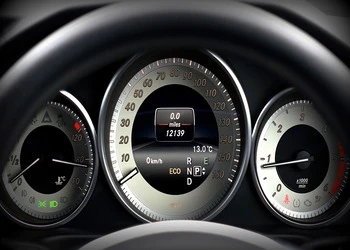
Your AI dashboards are lying to you: Here are 4 ways to better assess AI performance
A successful outcome on the dashboard doesn’t always translate to a successful outcome for the customer. Discover which signals will paint the most accurate picture
Add bookmarkListen to this content
Audio conversion provided by OpenAI

Artificial intelligence (AI) has moved quickly from experimentation into everyday business operations. Companies are running chatbots, automating repetitive support work, and giving customer service teams AI tools to help them respond faster.
On paper, a lot of this looks like a win. Automation goes up. Response times drop. Fewer conversations reach a human. Costs often improve too.
But talk to customers, or to front-line support teams, and you'll sometimes hear a different story.
A chatbot can answer in two seconds and still get it wrong, keeping someone stuck in an automated loop and more frustrated with every step. On the dashboard, that interaction may look like a success. From the customer's side, it wasn't.
From what I've seen working on enterprise AI systems, the companies getting real value from AI aren't necessarily the ones automating the most. They're the ones asking the harder question: is this making the customer's experience better, or just making the numbers look better?
This article covers:
- The "efficiency trap" that emerges when metrics are too focused on speed and labor reduction.
- The four angles that can more accurately help assess AI performance.
- The impact of poor AI on employees.
- Five factors to monitor in tandem when measuring the full impact of AI.

Don't miss any news, updates or insider tips from CX Network by getting them delivered to your inbox. Sign up to our newsletter and join our community of experts.
Why we fall into the AI efficiency trap
It's easy to see how this happens.
Once an AI system goes live, leadership wants proof it's working. The easiest metrics to pull are containment rate, response time, handling time, and cost savings. Useful, but they only tell you whether operations are running faster.
The problem starts when those numbers become the whole story.
Say a customer contacts a company about a billing issue. The chatbot responds immediately and the conversation never reaches a person. The system logs it as contained. Successful.
But what if the chatbot got the answer wrong? What if the customer tried again an hour later, or eventually called in and had to explain the whole thing from the beginning?
The dashboard still shows a win. The customer would probably describe it very differently.
That gap is what leaders need to watch. Efficiency tells you how well the system is running. It doesn't necessarily tell you whether the system actually helped the customer.
Can a chatbot resolve 80% of conversations without human intervention?
One mistake I see often is teams celebrating a high containment number without checking what happens to the customer afterward.
Say a chatbot handles around 80 percent of conversations without human involvement. On its own, that sounds impressive.
But containment only tells you the conversation stayed inside the automated channel, not whether the customer got the right answer, or came back later still looking for help. That billing customer from earlier could be sitting inside that 80 percent, contained but no closer to an answer.
A contained interaction can still be a bad customer experience. The problem just may not show up clearly on the dashboard.
The bigger issue is that AI doesn't always eliminate work. Sometimes it just moves the work onto the customer, who now has to try again, repeat information, or hunt for a way to reach a person.
That's why the containment number by itself doesn't tell us enough. Containment climbing alongside repeat contacts is worth investigating. So is response time improving while satisfaction falls, or fewer conversations reaching agents while the ones that do get harder to resolve.
AI should reduce how much effort a customer has to put in. It shouldn't just reduce how many conversations a human has to handle.
Four different factors to include when assessing AI performance
I find it more useful to look at AI performance from a few different angles instead of leaning on one metric.
- Operational numbers still matter: Response time, handling time, containment, and cost tell you whether things are running efficiently.
- But you also need the experience side: Did the customer get the right answer, and was the issue resolved the first time, or did they have to come back?
- Then, there's trust: Customers may be comfortable using AI for simple interactions, but that trust disappears fast when the system gives wrong information or makes it hard to reach a person. Satisfaction scores and repeat contacts help catch that early.
- And underneath it all sits the business question: Is this retaining customers, freeing up employee time, or just moving work from one part of the process to another?
No single number gives you the full picture. The useful part is looking at these signals together instead of relying on whichever metric looks best.
The people working alongside the AI
There's another part of AI measurement that doesn't always get enough attention: the employees working alongside the technology.
Poor AI doesn't only frustrate customers, it creates additional work for support teams. If agents regularly have to correct AI-generated responses, apologize for incorrect information, or work through escalations that arrive without context, the AI may be moving work downstream rather than removing it.
It's worth watching how often your human agents are correcting AI responses, whether escalations arrive with enough context for the agent to understand what already happened, and whether your team feels the AI is helping them do their job or just creating another step to manage.
The goal isn't to have people spend their time cleaning up after AI. AI should take repetitive work off their plate so they have more time for situations that need human judgment, empathy, and problem-solving.
How can I measure the impact of AI more effectively?
You don't need to rebuild your entire reporting process to start measuring AI differently.
Start by asking whether customers are putting in less effort since AI was introduced, whether issues get resolved the first time, and whether your support team is spending less time on repetitive work or more time correcting AI. Most importantly: can you connect an improvement in AI performance to something the customer or the business actually cares about?
If you can't answer that, your dashboard may be showing you efficiency without showing you the full experience.
Start small. Pick one customer-facing metric – Customer Effort Score, repeat contact rate – and look at it alongside your existing automation numbers.
For example, if chatbot containment climbs after a new AI release, check what happens to repeat contacts over the same period. Containment up and repeat contacts down is a good sign. Containment up while the same customers keep coming back means the containment number may be hiding a problem.
That one comparison tells you more than containment alone. Over time you can add satisfaction, employee feedback, retention, whatever matters to your business. The point isn't a more complicated dashboard. It's knowing whether the AI is actually helping.
The Takeaway: Big numbers should not be the goal
We all have KPIs to achieve, and significant, quantified automation gains can look great in a presentation. They should not, however, become the goal.
The companies that get lasting value from AI will be the ones that look at efficiency, customer effort, employee experience, trust, and business impact together.
Customers don't care about your containment rate. They care whether you understood their problem, solved it, and made the experience easier. That's the real measure of AI success.
Quick links
- The CX Recovery Layer: What happens when the agent is wrong?
- Why AI agents won't fix your decision-making (here are 3 things that will)
- AI to augment human roles and elevate experience: Practitioner insights from All Access Future Contact Centers 2026
CCW EU 2026

CCW Europe will explore how service is transforming from execution to a strategic driver of trust, insight, and value.
The agenda features over 250 world-class speakers, delivering actionable strategies, global best practices, and inspiring insights on AI, innovation, and customer-centric transformation. From the Failures & Fixes stage to international benchmarks, each session equips leaders to navigate this fast-paced environment and drive meaningful change.
Learn More