Stop reporting friction: A CX leader’s guide to winning the c-suite
As her first book is published, CX executive Aurelia Pollet tells CX Network why practitioners should pick “one ugly, expensive problem and own it”
Add bookmark
When a social acquaintance told Aurelia Pollet her job sounded made up, the VP of customer experience at CarParts.com laughed. Then she went home and wondered if he was wrong.
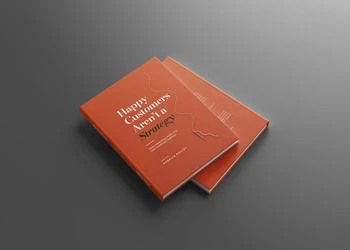
The experience was the catalyst for her first book, Happy Customers Aren't a Strategy, in which she sets out how "customer delight" is the result of a well-run company, not a plan for running one. It's a term that has been used by some of the biggest names in CX, but in today's trading environment, the idea is eroding the power CX has to drive change and growth.
In this interview, Pollet (pictured below) explains how CX leaders can stop reporting friction and start governing how it gets fixed: by putting a price on customer problems, bringing a recommendation to the C-suite, and owning the outcome through to delivery. She tells CX Network:
- Why the existential threat to CX isn't technology, but being the advisor when AI has commoditized the role.
- The steps can CX take to shift its purpose from measurement to execution.
- And the four skills practitioners need to become indispensable to the C-suite.
Find out more about the book – and purchase your copy – here.

Don't miss any news, updates or insider tips from CX Network by getting them delivered to your inbox. Sign up to our newsletter and join our community of experts.
CX Network: Your book is called Happy Customers Aren't a Strategy. What is it about, and who is it written for?
 Aurelia Pollet: Someone once told me at a dinner party that my job sounded made up. "Isn't that just customer service with a fancier title?"
I laughed. Then I went home and stared at the ceiling for an hour, because I wasn't entirely sure he was wrong.
I've led customer-facing teams in luxury, DTC, manufacturing, and e-commerce, and found the same thing everywhere: the title, the dashboards, the seat at the table, and no power.
The mandate was "make customers happy," and nobody defined what that meant when happiness conflicted with profit.
That's the title. Happy customers are the result of a well-run company, not a plan for running one.
The book is about the job between what a company promises, what it can execute, and what it can afford: making those trade-offs visible and proving the decision worked. It's for CX leaders who have dashboards but can't get problems fixed, and executives who want to know what CX should actually deliver.
CX Network: As the tag line instructs, CX must "stop measuring smiles and start running a business". What skills do practitioners need to become indispensable to the C-suite?
Aurelia Pollet: There are four:
Financial fluency. Put a price on a customer problem. At a previous company, I stopped bringing satisfaction scores to the P&L review and brought investigations. One customer waited two days for a delivery while installers sat on site: $36,000. Another got the wrong products, and we remade and expedited the order, which erased our margin. They never ordered again. The costs were already in the P&L. They just had no customer attached.
I call the format a receipt: cost of the failure, root cause, cost of the fix, and the delta. If a problem costs $150K a year and the fix costs $40K, that's a $110K delta. That's not a CX argument. It's a business case.
Investigation. When I joined an e-commerce retailer, I placed orders, including a heavy part that ships by freight. Nobody told me it needed a delivery appointment. The carrier called from a number I didn't recognize, I assumed spam, and the part never arrived. One week as a customer exposed three problems in three departments, with nobody tracking their combined effect.
Translation. The CFO hears cost, the COO hears rework, the CMO hears retention. Same problem, different framing.
Execution without formal authority. After the yes, you're running a project over people who don't report to you. You earn that authority with a track record.
Underneath all four is one test: does this win for the customer and the company? If only one wins, redesign it.
CX Network: This isn't the first time practitioners have been told CX needs to transition from measurement function to change maker. In your experience, what gets in the way of turning insight into action?
Aurelia Pollet: At a manufacturer where I led CX, split shipments were a top failure. Operations said they had no staging space. Finance said freight cost per unit was down. Both were right. That's why we were failing.
We agreed it was frustrating, added action items, and nothing changed. Two weeks later, a VIP customer called the CEO. The CEO told the COO to fix it, and the account was saved.
The fix came from a phone call, not a process. I was accountable for reporting friction but had no say over the priorities creating it. CX needs a seat in how trade-offs get made.
The fix has a visible cost, while the failure is just "customers are frustrated." That loses to any number.
CX Network: What steps can CX take to shift its purpose from measurement to execution?
Aurelia Pollet: Pick one ugly, expensive problem and own it.
- Sit next to someone on the frontline. Ask what is manual, repetitive, or shouldn't be their job.
- Trace one complaint to the P&L. Name the system, the handoff, and the cost.
- Build one receipt.
- Bring a direction. Say what you recommend and who needs to be involved.
- Run it like a project. Baseline first, measure at 30, 60, and 90 days, and show what disappeared.
Do that three times and you have a track record, which is worth more than another framework.
CX Network: As function, CX is often the glue between sales, operations and marketing. When it comes to recognition, what's your advice for practitioners who want CX to be viewed a business discipline in their organization?
Aurelia Pollet: Keep the connector role. CX is one of the few functions that sees where Marketing's promise, Operations' limits, and Finance's budget collide.
The trap is being a connector who owns nothing.
At a technology startup, the product was brilliant but hard to deploy. Instead of taking that to Product, I built training, onboarding, and hand-holding. It told the company everything was fine. I was absorbing the cost of a decision nobody had made.
I should have brought a receipt: support hours per deployment, what they cost, and what simplifying the product would cost.
So connect, and own one outcome: retention, repeat rate, cost per contact, return rate, or conversion. Report it with the definition and cadence Finance uses, then get Finance to validate it.
CX Network: What should CX leaders do differently with their CEOs?
Aurelia Pollet: Give them a test drive before the receipt.
CEOs see the company through dashboards and meetings. Customers see it through checkout, returns, and a freight carrier calling from an unrecognized number. The CEO has to feel it.
Most won't do that themselves, so build the test drive: five minutes in a meeting already on the calendar, one real failure, live, matched to what they care about. Revenue? Show checkout friction. Retention? Walk through a cancellation. Then stop talking.
After they've felt it, bring the receipt.
Here's the reaction you want. A cancellation used to trigger emails among customer service, corporate, and the vendor, three people about a hundred times a week. We built it into our AI agent and ticketing system, and manual cancellations went to zero.
The CEO wasn't impressed by the fix. He was floored the problem existed: three people playing email telephone for so long that everyone called it Tuesday.
You don't want "great job." You want, "What else is hiding like this?"
CX Network: What does the CX leader of the future look like?
Aurelia Pollet: Not just the person who knows what customers think. Listening gets cheaper every year, and AI will do more of it. The existential threat to CX isn't technology. It's staying advisory when advisory insight is no longer scarce.
AI can already listen, summarize, and spot patterns. It can't sit with the team on the warehouse floor and notice what they've stopped mentioning, build the coalition, translate one failure for three executives, or answer for the outcome. The CX leader of the future makes the trade-offs visible, brings a recommendation, and stays in the room to deliver it.
The books, certifications, and conferences built a profession. They didn't build a discipline. The difference is accountability for outcomes. Finance owns money. Marketing owns growth. Operations owns delivery. CX owns insight, and insight without action is expensive observation.
The leaders who build the discipline will stop reporting friction and start governing how it gets fixed.
Happy customer's aren't a strategy is available to buy online
Quick links
- Meet the board: Kellanova's Phil Wilkinson on breaking down the boundaries in CX
- Experience is everything: The 3 steps that prevent CX failure
- The insights API aiming to solve the synthetic data trust problem