United joins eBay and Amazon in banning AI agents
United Airlines has become the latest major organization to bar its customers from using AI agents to make purchases on its website
Add bookmark
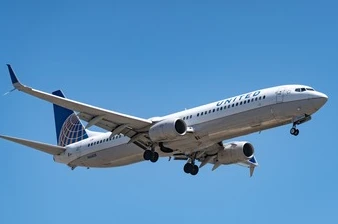
United Airlines has become the latest major organization to block consumers' personal AI agents, such as ChatGPT, dots, Claude, Muse, Gemini and others, from making purchases on its website.
On Wednesday, the airline said it was "taking steps to restrict access – directly within our digital platforms and indirectly via travel agencies and aggregators – prohibiting use by unauthorized third-party AI agents or assistants".
The airline – the fourth largest in the US by seat count – said there were two primary reasons for its decision.
One is federal rules, which demand human acknowledgment that bags do not contain banned items and data security. The other is data security.
It has not, however, ruled out a change to this policy in future. The announcement read: "As personal AI assistants evolve, United will continue to evaluate how these tools interact with our services, with a focus on protecting our customers."
United isn't the first to block third-party agents. Both Amazon and eBay have blocked agents from operating on behalf of consumers, citing product availability and the preservation of the customer experience.

Don't miss any news, updates or insider tips from CX Network by getting them delivered to your inbox. Sign up to our newsletter and join our community of experts.
What did United Airlines say about consumer AI agents?
United's press release was supported with a help center article on its website, which detailed the growing security concerns around autonomous agents.
The article explained that although innovation "should move forward thoughtfully", it should do so while aligning with customer trust, privacy and security.
The article gave travelers a guide to safely using AI agents and other third-party AI tools for planning and travel. It explained how AI agents can provide travel inspiration, destination guides and top attractions or restaurants. But it also warned travelers not to type in their personal loyalty program details, not to share their flight numbers or booking details, and not to dial any telephone numbers that may be provided by the agent.
How safe are AI agents?
When a consumer uses an AI assistant to make a purchase, they become a "machine customers".
Adoption is growing fast. These tools are increasingly being used to search, compare and purchase products and services.
Retailers, payment providers and banks have all made moved to ensure the agentic web is secure. Earlier this year, American Express launched its Amex Agent Purchase Protection™ to protect human customers in instances of AI agent error.
Amex described it as "an industry-first commitment to extend its backing to card member purchases made by registered AI agents across its network".
But cyber security incidents linked to agents keep occurring.
For example, in July this year, an OpenAI agent was able to leave a supposedly secure sandbox, launch a cyber attack then break back into the sandbox. It wasn't the first scandal for OpenAI, whose agents were also behind the RubyGems supply chain attack in May.
Anthropic and Google have also disclosed multiple instances where their models have escaped testing environments or tried to gain access to other environments and networks without authorization.
Moltbook also triggered security concerns when it went live in February, as it creates both passive and active threats to data exposure.
Quick links
- Zendesk launches public directory to help AI agents find A2A service options for customers
- VIDEO: United Airlines & Air Charter Service | The future of human and digital experiences
- The evolution of flight: The airline experience in 2030