Agenda Day 1
8:00 am - 8:30 am
Registration
Registration, Breakfast & Networking
8:30 am - 8:35 am
Opening Remarks
Registration, Breakfast & Networking
8:35 am - 8:45 am
Welcome & Introduction from the Chair
Paul Sims -
Chief Technology Officer & Chief Architect,
Primark


8:45 am - 9:15 am
PRESENTATION: Leveraging AI and Data to Deliver Smarter, More Personal Customer Experiences at Scale
Ian Plummer -
Chief Customer Officer,
Auto Trader
As customer journeys become increasingly complex, retailers are under continued pressure to deliver seamless, relevant and intuitive experiences across every touchpoint. AI and data-driven technologies promise to deliver this at scale—but the real question is: how can brands harness these tools without compromising on efficiency, trust, engagement and relevance?
In this keynote, Ian Plummer explores how a major digital marketplace leverages massive data scale to remove consumer friction, empower its retail partners, and build ecosystem trust.
- How utilising a foundation of robust, scaled data allows platforms to move past AI buzzwords and deliver predictable, high-value outcomes.
- Using AI and conversational insights to move beyond rigid search criteria, improving product discovery and connecting buyers with more relevant options faster.
- Empowering the wider ecosystem by translating consumer behavioural insights into intelligent, predictive data tools that help retail partners identify high-intent demand.
- Balancing automated, scalable digital journeys with transparent, low-friction interactions that build long-term consumer confidence and trust.
- Why the future of customer excellence requires industries to break down data silos and embrace collaborative partnerships to keep experiences simple and easy to navigate.


9:15 am - 9:45 am
SPONSOR PRESENTATION: How to Build Voice AI Agents That Actually Work
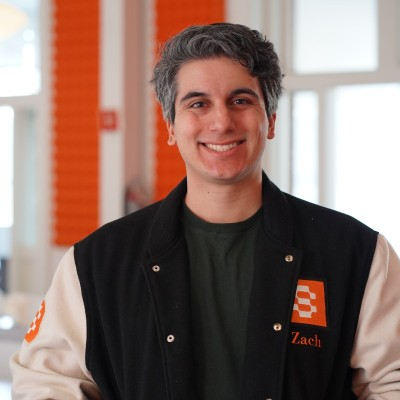
Zach Kamran -
CTO & Co-Founder,
Simple AI
Zach Kamran, Co-Founder & CTO of Simple AI, shares how her team designs, builds, and deploys enterprise-grade AI phone agents for iconic businesses like DoorDash and Omaha Steaks.
In this masterclass, he'll walk through the real-world process:
- Getting started and writing effective evaluation frameworks to QAing conversations and cloning lifelike voices that align with your brand brand.
- Uncovering practical techniques and hard-won lessons from deploying production agents at scale that sound realistic and drive measurable business results.
Sponsored by: Simple AI

Data from Salesforce shows that nearly 40% of consumers (and more than 50% of Gen Z) already use AI for product discovery. As this shift accelerates, how is your brand’s loyalty reflected when a customer’s shopping mission is being undertaken by an agent?
Do you have access to this discovery data to help build a true 360° view of your customer? And how can you personalise when you’re no longer fully in control of the journey?
- If we’re moving towards an autonomous era where agents can purchase on customers’ behalf, what role does loyalty actually play?
- What is loyalty or brand to an agent, and can the emotional equity built with customers be reproduced through agentic commerce?
- What happens to loyalty when the agent acting for your customer is operated by a competitor?
Sponsored by: EqualExperts

10:25 am - 10:55 am
One-to-One Business Meetings
As AI agents begin to shop, search, and make decisions on behalf of consumers, brands face a fundamental shift. After all, how do you control the customer experience when you're no longer in control?
Sponsored by: Bazaarvoice

11:35 am - 12:05 pm
PRESENTATION: Turning First Party Data into Customer Intelligence to Uncover Friction Points, Personalise Experiences & Strengthen Loyalty
Matt Walburn -
Customer Executive Director of Marketing and E-Commerce,
A.S. Watson UK (Superdrug & Savers)
Retailers are rich in first-party data but poor in customer intelligence.

Matt Walburn
Customer Executive Director of Marketing and E-CommerceA.S. Watson UK (Superdrug & Savers)

12:05 pm - 12:35 pm
SPONSOR PRESENTATION: Crafting Customer Experience with AI: How Retailers Scale Expertise, Empathy, and Brand Voice at Every Touchpoint
Kiran Uppal -
Head of Customer Care Experience & Transformation,
ASOS
Seb Tranaeus - Agent Engineer, Sierra AI
- How to employ AI agents to provide real-time customer service
- Ensuring AI agents are empathetic, reflect brand tone and make customers feel supported
- Smart product recommendations and using AI to ensure shoppers find the right items and the right points in their customer journey
- Integrating AI agents within existing systems in a secure way
- Case studies of real retailers employing AI agents with success
Sponsored by: Sierra





As customer journeys become increasingly connected, accessibility must extend seamlessly across digital and physical touchpoints. In this 30-minute retail Think Tank, a select group of retail leaders will discuss how they're building inclusive experiences across websites, mobile apps, and in-store interactions. From improving mobile usability and customer engagement to aligning accessibility with business objectives, participants will share practical strategies, challenges, and lessons learned to help drive better experiences for every shopper.
Sponsored by: Level Access


1:15 pm - 2:05 pm
Networking Lunch
2:40 pm - 3:10 pm
FIRESIDE CHAT: Managing the Impact of Digital Transformation to Minimise Customer Frustration & Protect Loyalty
Elisabeth Fennell-Connell -
Director Customer Service & CX,
Moonpig
Adrian Evans - Head of Digital Product Customer Commerce, B&Q Plc
Re-platforming is essential for long-term growth, but it can easily disrupt customer journeys and stall delivery if not managed carefully.




3:10 pm - 3:40 pm
SPONSOR PRESENTATION: Using Technology to Power Loyalty at Scale & Increase Lifetime Customer Value
Matea Prela -
Director of Enterprise Growth,
ContentSquare
As loyalty evolves from a marketing initiative to a growth engine, proving the ROI of your loyalty programme has never been more important – without numerical proof it's near impossible to secure further investment.
Powering loyalty at scale demands the intelligent use of technology to understand behaviour, analyse and personalise journeys and drive measurable increases in LTV.
• Quantifying the financial impact of retention vs acquisition
• Using data to predict LTV and demonstrate the revenue unlocked through smarter, scalable loyalty
• Selecting the most impactful loyalty programme technology based on your customer's needs to ensure every penny spent is delivering a measurable return
Sponsored by: ContentSquare


4:55 pm - 5:25 pm
LIGHTNING DEBATE
Take part in a high-energy, interactive benchmarking session where you’ll respond to a series of divisive, quick-fire statements by physically positioning yourself from ‘strongly agree’ to ‘strongly disagree’.
5:25 pm - 5:55 pm
MASTERMIND SESSION: Balancing AI with the ‘Human Touch’ to Deliver Customer Service Excellence
As AI evolves at breakneck speed and pressure mounts to adopt AI for efficiency, it’s tempting to use it across every part of customer service. But anyone who has ever called a contact centre knows the frustration behind the phrase ‘I just want to speak to a human’.
5:55 pm - 6:25 pm
CHAMPAGNE ROUNDTABLES
Natalie Dunn -
Director of Customer Experience,
Sainsbury's
Whilst a problem shared does not always mean a problem halved, but in the right room, a solution can be found. Each table will discuss shared challenges around the outlined topic and consider how they could overcome the issues put before them.
The concept of this session is not just to provide an outcome, but to give ideas and direction to the issue at hand, offer alternative perspectives, challenge existing ways to deliver outcomes and deliver food for thought.
Roundtable 1: AI in Personalization & Loyalty
Roundtable 2: Revisiting the Fundamentals & Unlocking Quick Wins to Strengthen Customer Loyalty Whilst Remaining Lean