Day 2
8:00 am - 8:30 am
Breakfast & Networking
8:30 am - 8:40 am
Chair's Opening Remarks
Nicole Cable -
Chief People & Experience Officer,
C3 HealthcareRx


8:40 am - 9:10 am
Keynote Case Study | After the Storm: Where AI is Delivering Real Value in PX
Jason Szczuka -
Chief Digital Officer,
Bon Secours Mercy Health
The AI storm has calmed, and the reality of implementation has set in. This in-depth case study showcases the real-world journey of AI implementation in PX, from initial excitement to the realities of day-to-day impact. Through a candid, data-driven narrative, learn how one organization navigated the challenges of adoption, measured true ROI and learned from both successes and setbacks.
- The step-by-step strategies used to maximize AI’s value in PX while sidestepping common pitfalls
- What worked, what didn’t and how the team adapted along the way, with a focus on transparency and continuous improvement
- A framework for evaluating new AI opportunities in your organization
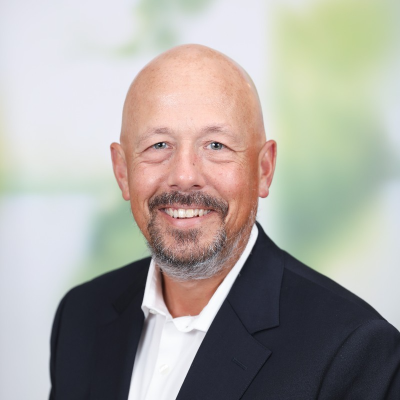

9:10 am - 9:40 am
Presentation | Smarter Patient Engagement Leads to a More Efficient Health System
April Jones -
Executive Vice President, Provider Solutions,
PatientPoint
Jeffrey George - Market VP, Hospital and Provider Solutions, PatientPoint
Health systems today face a dual mandate: elevate the patient experience while simultaneously driving greater operational efficiency. Meeting rising expectations requires more than traditional outreach—it demands a smarter, more personalized approach to engagement.
- Transform personalized outreach into real patient action—driving action, improving adherence and supporting better outcomes
- Leverage rooming time as a value-added moment, converting waiting and preparation time into targeted education and meaningful engagement
- Integrate procedure videos into a broader education strategy, supporting clinical efficiency by saving time
Sponsored by: PatientPoint

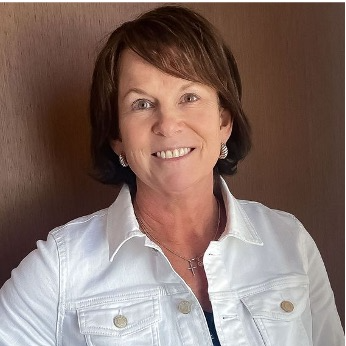

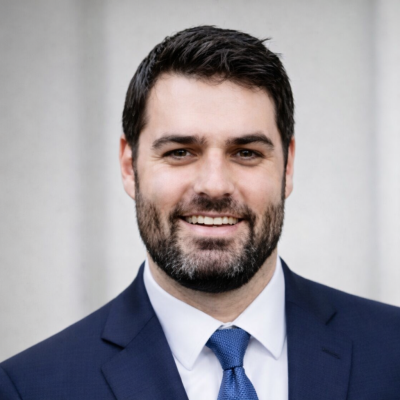

How do you maximize the human capital of every patient interaction, setting boundaries for outreach frequency to avoid fatigue and designing engagement journeys that feel personal, not transactional? This think tank will explore and equip attendees with practical strategies for doing more with less, delivering high-touch care on a tight budget.
10:20 am - 10:50 am
1:1 Business Meetings
11:30 am - 12:05 pm
Panel Discussion | Helping Patients Navigate the System by Delivering Unified Journeys
Traquenna Smith Branch -
Vice President Contact Centers & Strategy,
Memorial Hermann Health System
Caroline Carney - Chief Executive Officer, Magellan Health
Ryan Lockwood - Vice President, Patient Experience, El Camino Health
As patients move between providers of care to achieve their desired health outcomes, the end result can be fragmented workflows and disconnect digital tools – leading to eroded trust, delayed access and fragmented experiences. In this panel, PX leaders will explore how they can create more seamless and navigable experiences across the healthcare ecosystem.
- What digital tools can unify the patient journey in an inclusive manner?
- How can community partnerships be leveraged to simplify access and strengthen continuity?
- How can leaders connect siloed services to reduce friction and improve outcomes?
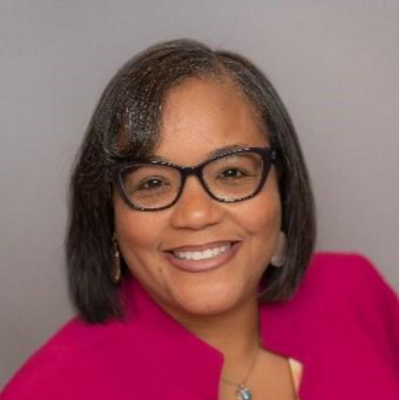
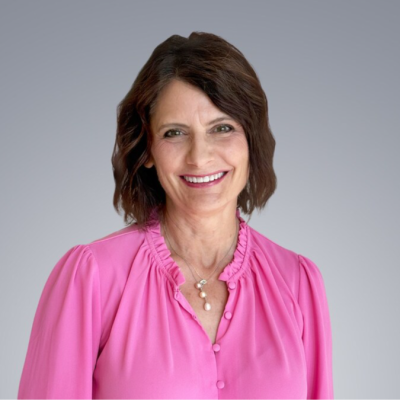
Traquenna Smith Branch
Vice President Contact Centers & StrategyMemorial Hermann Health System




12:05 pm - 12:35 pm
Presentation | When Every Call Matters: Voice AI That Works Within Your Healthcare Ecosystem - Not Against It
Patients calling a healthcare contact centre are often navigating a system that already feels overwhelming. The AI handling those calls needs to be accurate, compliant, and sensitive — and it needs to work with the clinical and administrative systems, as well across multiple different facilities with different requirements.
In this session, Omilia makes the case that most healthcare AI deployments fail not because the technology is wrong, but because the AI wasn't built for the complexity of healthcare.
Prior authorisations, insurance verification, appointment scheduling across multiple clinic systems - these are not FAQ interactions. They require deep integration, HIPAA-grade auditability, telephony level integrations and AI that adapts continuously as coverage terms and care protocols change, without manual retraining or vendor re-engagement.
True agentic AI doesn't wait to be retrained - it improves itself.
We'll cover
• How to deploy AI across a complex, multi-system healthcare environment
• Where LLMs add genuine value in healthcare service automation and where purpose-built voice AI is the right tool for live patient calls.
• What the Glass Box approach means for compliance teams who need a full audit trail on every automated patient interaction.
Deployment in two weeks. ROI in three months. Patient service that improves without adding to your team's workload.
Sponsored by: Omilia

12:40 pm - 1:10 pm
1:1 Business Meetings
1:10 pm - 2:00 pm
Networking Lunch
2:35 pm - 3:05 pm
Presentation | Orchestrating the Patient Journey with Agentic AI
Sunny Nanda -
General Manager, Healthcare CX,
NiCE
Healthcare has reached a breaking point where workforce shortages and operational friction cost the industry billions. While most automation merely deflects simple tasks, Agentic AI acts as a "control tower," reasoning across EHR, CRM, and billing systems to execute complex, multi-step workflows.
In this session, Sunny Nanda from NiCE will demonstrate how Agentic AI Orchestration serves as the "connective tissue" of the healthcare ecosystem. By moving beyond simple automation to autonomous agents that can reason across clinical (EHR) and operational (CRM, Payer Portals) systems, organizations can transform high-friction touchpoints into seamless flows.

3:05 pm - 3:35 pm
Presentation | Humanizing Experiences: Measuring Institutional Climate to Drive Retention and Elevate Patient Experiences
Meghan Lahey -
Vice President of Patient and Employee Experience,
Legacy Community Health
In today’s healthcare environment, where high turnover and interconnected PX and EX experiences are prevalent, meaningful recognition is essential
- Foster meaningful engagement to drive measurable improvements in PX
- Leverage climate data to uncover experience and quality blind spots, informing long-term strategy
- Break down silos to achieve a unified, impactful “human experience” approach


3:35 pm - 4:05 pm
Interactive Session | Championing Providers for Human Experience Transformation
Felicia Hurst -
Senior Director, Patient Experience,
Children's Health
Pamela Okada - Chief, Division of Pediatric Emergency Medicine, University of Texas Southwestern Medical Center
Provider skepticism toward patient experience initiatives is common—often rooted in competing priorities, change fatigue, and past efforts that failed to translate into meaningful clinical impact. This session explores how targeted training, collaborative rounding, and shared ownership can transform skepticism into authentic provider engagement and sustained partnership.
- Identify common drivers of provider skepticism toward patient experience initiatives and recognize how competing priorities, past failures, and workflow misalignment influence engagement.
- Apply targeted training strategies that build provider confidence, relevance, and ownership of patient experience without adding unnecessary burden to clinical practice.
- Implement collaborative rounding models that strengthen trust, improve interdisciplinary relationships, and integrate patient experience principles into real-time clinical workflows.
- Establish shared ownership frameworks that align providers, leaders, and care teams around clear expectations, accountability, and sustained experience outcomes.
- Translate engagement strategies into measurable impact by connecting provider partnership to improvements in patient experience, caregiver engagement, and culture.



Pamela Okada
Chief, Division of Pediatric Emergency MedicineUniversity of Texas Southwestern Medical Center