CX Travel and Hospitality Exchange - Day 2
8:00 - 8:30
Breakfast & Networking
8:30 - 8:40
Chair's Opening Remarks
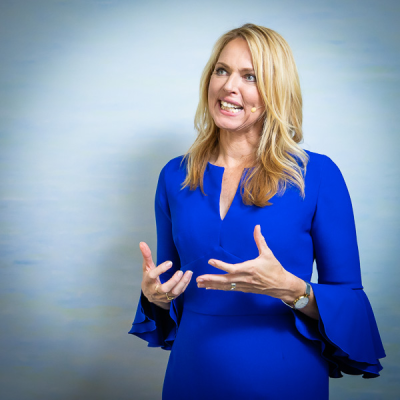
Nienke Bloem -
Professional Customer Experience Expert,
Nienke Bloem Services BV

8:40 - 9:10
Fireside Chat | Crafting a Customer-Centric Culture: The Vision & Incentives that Cement Customer Loyalty
Sue Bradley -
Head of Customer Experience,
Hays Travel
Building strong customer loyalty starts from within. Explore how fostering employee engagement, brand alignment, and a customer-first culture can directly influence guest satisfaction and long-term loyalty. Gain insights into how internal culture, training, and leadership strategies can empower teams to consistently deliver exceptional experiences that strengthen brand advocacy and retention.


9:10 - 9:40
Sponsor Presentation | Freeing the Movement of Frontline Staff: Leveraging AI to Empower Employees to Make CX Decisions
Despite the fear that AI will replace frontline employees, utilising the right kinds of AI can in fact liberate human resources from tasks that could be automated. Instead of spending hours answering common customer queries that necessitate quick, customary responses, frontline employees can re-direct their energies to higher-value customer interactions by adopting the right AI solutions.
Sponsored by: Treasure AI

Perhaps one of the most pressing questions that many CX executives are pondering right now is: Where in the chain do we step in? There remains ever growing trust issues between CX executives and AI solutions in terms of AI's abilities to act in a human and empathetic way so gleaning when AI should step in and step back is vital.


Sponsored by: ElevenLabs

Customer experience often spans multiple teams, from marketing and operations to digital, customer service, and product. Yet disconnected strategies and data can hinder positive CX work. Discover practical ways to align CX functions, improve cross-department collaboration, and create a unified customer journey.
• Discover what causes fragmentation across customer experience functions and how leading organisations break down silos to deliver a seamless, end-to-end customer journey
• Learn why cross-functional alignment, across marketing, operations, digital, and customer service, is critical to consistent CX delivery, and how shared goals, data, and accountability drive better outcomes
• Explore how organisations can use collaboration and integrated systems to unify customer insights, streamline decision-making, and create more personalised, efficient, and impactful customer experiences.


11:30 - 12:05
Presentation | Cracking the Data - Using Customer Data Platforms to Draw Valuable Customer Conclusions & Personalise Experiences
Tommaso Bertini -
Chief Marketing Officer,
Alpitour World
Understanding how to interpret and connect the dots between data points is one of the key methods used to put yourself in the customers' shoes. Nonetheless how do we comprehend such vast amounts of data, reduce silos, and architect a coherent trend to personalise customer experiences?

12:05 - 12:35
Sponsor Presentation | Is there One ‘True’ Customer Experience? Harnessing AI to Create a Unified Picture Across Fragmented Touchpoints
Des Traynor -
Co-Founder,
Fin
One of the most pressing challenges for CX leaders is gleaning their customers' journey as a unified whole or attaining the true customer experience. Travel and hospitality being one of the most fragmented industries, from airport arrival, to flight, to hotel check-in, to holiday excursions - how does the industry create a unified picture of CX by harnessing AI and data?
• Defining the points across the customer journey at which customer sentiment can be most clearly identified
• Demonstrating how scattered customer data can be transformed into a singular, comprehensible 'truth' to inform future CX strategy and create customer profiles
• Exploring the ways in which AI can make vast amounts of customer data comprehensible to establish CX trends and adjust strategy accordingly
Sponsored by: Fin



12:40 - 13:10
1:1 Business Meetings
13:10 - 14:00
Networking Lunch
As AI transforms the contact centre from a cost centre into a value driver, the role of frontline agents is rapidly evolving. With intelligent tools handling routine queries and surfacing real-time insights, agents are now expected to deliver higher-value, emotionally intelligent interactions. The question is how do we empower agents to thrive alongside AI while maintaining efficiency, consistency, and customer trust?
• Explore how AI can augment, not replace, agents by automating repetitive tasks and enabling faster, more informed decision-making
• Define the optimal balance between human empathy and AI efficiency across different types of customer interactions
• Discover how to equip contact centre teams with the tools, training, and autonomy needed to deliver personalised, high-impact customer experiences


14:40 - 15:10
Presentation | The Destruction of the Interface: Changes to Organic Search, Increasing Visibility, & Personalising Digital Experiences
Mario Manfuro -
Senior Director of Digital Experience,
Radisson Hotels
With the recent shift to AI-powered search due to the 'AI overview' feature on Google, there has been a notable decrease in organic traffic with the hospitality industry being hit the hardest. Speculations over the demise of website interfaces due to increasing usage of app services and large language models (Chat GPT, Claude AI, and Co-Pilot) have been on the rise. Therefore, the questions on everyone's minds are: Is there a way to remain visible by integrating AI, partnering with LLM's, or improving SEO/GEO to acquire new customers and how does personalisation help with this?
• Learn about how organic search has permanently altered the travel and hospitality landscape after the introduction of AI overviews and how the sector has responded
• Discover strategies to retain and increase visibility on search by adapting searches to rank higher for AI search such as focusing on generative engine optimization (GEO)
• Explore the ways that AI integration and partnering with LLM's can offer in successfully adapting to the changes in organic search to acquire new customers

15:10 - 15:40
Presentation | Back to Basics: Building Customer Loyalty Through Personalisation & Purpose
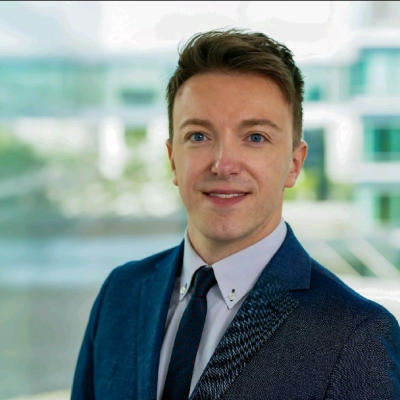
Marie Daly -
Chief Operations Officer,
Transport for Wales
In an era of increasing complexity, the strongest customer relationships are built by returning to core principles: understanding your customer, empowering your people, and delivering meaningful, personalised experiences. This session explores how organisations can refocus on the fundamentals while embedding personalisation at every touchpoint to create a truly customer-centric culture that drives lasting loyalty.
• How can organisations return to core customer-centric principles while scaling personalisation across the customer journey?
• What strategies help align global teams around a shared brand purpose while enabling locally relevant, personalised experiences?
• How can businesses equip employees to embrace change while consistently delivering authentic, tailored interactions that build loyalty?


15:40 - 16:10
Fireside Chat | Data in a Volatile World – Forecasting Travel Patterns & Personalising Offers to Satisfy Customers in an Ever-changing Market
Kinnari Ladha -
Chief Data Officer,
Travelodge
A heated discussion on how the changing geopolitical landscape is leading to ever-evolving travel patterns that are becoming increasingly challenging to predict. Explore how to stay ahead of the curve with travel pattern trends and how to personalise offers accordingly, capitalising on a turbulent environment rather than missing out because of it.
• How can data integration improve organisations' ability to forecast shifting travel demand, customer behaviour, and ultimately help travel and hospitality brands maintain service continuity and customer trust during global instability?
• In what ways can diplomatic data-sharing partnerships between travel organisations and international stakeholders enhance CX strategy and potential personalisation offers?
• How can predictive analytics tools that monitor regulatory, climate, and geopolitical changes be harnessed so that brands can proactively mitigate changes to travel plans and redirect customers in a highly tailored way, establishing stronger customer confidence and brand loyalty?