Agenda Day 1
7:30 am - 9:00 am
Registration, Breakfast & Networking
8:25 am - 8:30 am
Programme Director’s Welcome
8:30 am - 8:40 am
Chair’s Opening Remarks
Exchange Chair: Dominique de Groot -
CX Expert & Keynote Speaker,
Studio Hospitality

8:40 am - 9:15 am
Opening Panel Discussion CX Digital Transformation - Navigating the Increasing Technology Landscape to Integrate Successfully with Legacy Systems in the Fast- Moving World Of CX
Geoffroy Berthon -
Global CX & CRM Director,
Bata Group
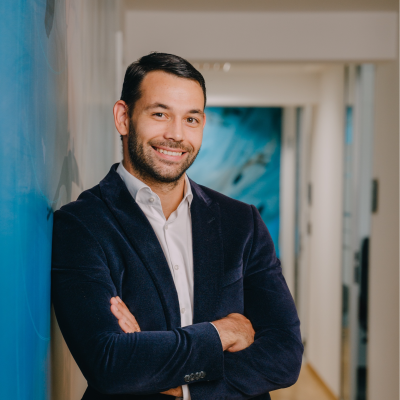
Ivan Protega - Head of Retail, JYSK
Change is putting significant pressure on retailers to stay ahead of shifting consumer needs, with pressure to drive productivity and operational efficiency whilst delivering outstanding experiences that deliver true value for their customers.
• With AI everywhere and every provider having a new AI based solution, how do you focus on what you really need and choose the right technology to solve your pain points among the many available AI solutions?
• How do you deal with overly complex, disconnected CX systems and move with speed when you have legacy systems?
• How do you introduce AI systems if the foundation tech systems are not fit for AI introduction?



9:15 am - 9:45 am
Presentation: Crafting Customer Experience with AI: How Retailers Scale Expertise, Empathy, and Brand Voice at Every Touchpoint
Seb Tranaeus -
Agent Engineer,
Sierra AI
Understanding how human-feeling AI can drive smoother service, smarter recommendations and stronger customer connections is vital in today's tech-driven CX landscape.
Join this session where we will explore:
- How to employ AI agents to provide real-time customer service
- Ensuring AI agents are empathetic, reflect brand tone and make customers feel supported
- Smart product recommendations and using AI to ensure shoppers find the right items and the right points in their customer journey
- Integrating AI agents within existing systems in a secure way
- Case studies of real retailers employing AI agents with success


Join this session to get to know your peers in the room!


11:35 am - 12:05 pm
Presentation The Multi-Channel to Omnichannel Journey - Creating A Unified, Customer-Centric Experience
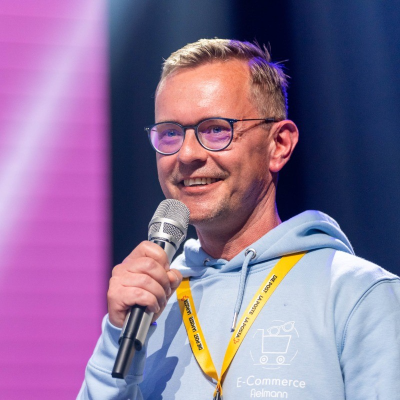
Stefan Wolk -
Chief Digital Officer, VP Digital Solutions & Innovation,
Fielmann AG
Fielmann, one of the top 3 opticians worldwide and the market leader in Germany, has long relied on its brick-and-mortar stores for business, with over 900 branches. Entering e-commerce late presented Fielmann with a unique challenge of having too many customers but too few digital services.
This session will cover the journey of introducing digital services and how this led to moving from multi-channel to omnichannel services, as customer expectations for seamless omnichannel experiences increased.
Stefan will shed light on how they drove the evolution of a consumer-centric omnichannel journey, overcoming challenges such as customers buying online and expecting flexible services such as in-store returns and exchanges, how they mastered the challenges in payment and logistics, the hurdles they had to overcome in introducing a returns portal and valuable learning from these processes. Real insights. Real challenges. A practical use case.

12:05 pm - 12:35 pm
Fireside Chat Retail Reimagined - What Is the Future of The Retail Shopping Experience & How Will Generation Zalpha Impact It?
Laurel Thompson -
WE Director Digital Experience and Site Merchandising,
Converse Inc.
This is a question on many minds as the retail industry undergoes dramatic change. While the convenience of online shopping is changing consumer behaviour, the physical shopping experience is becoming increasingly relevant to customer loyalty and brand engagement.
• What will the future in-store retail experience look like and how can businesses evolve to align with shifting customer needs and behaviours?
• Phygital retail: what will the combination of physical touchpoints with
digital innovations look like?
• Is the future experiential with a focus on community, is it the deeper integration of in-store technology or does it move beyond simple entertainment to create highly personalised, immersive, and seamless omnichannel experiences?
• Generation Zalpha - how should retailers engage with the next generation of digital native consumers?


Every retailer invests heavily in the purchase journey. But what happens after the sale, and especially when something goes wrong, is where customer loyalty is truly won or lost. A failed repair, a slow technician response, or a frustrating service process can undo everything that marketing and sales worked hard to build. Yet for many retailers, post-purchase service remains a blind spot rather than a strategic priority.
With customers increasingly judging brands not by what they sell but by how they support what they've sold, the operational side of customer care has never been more important. First-visit resolution rates, service network performance, technician quality, and post-service satisfaction are metrics that directly impact retention, but they rarely make it into the CX conversation.
In this think tank, we will share experiences and discuss how to elevate post-purchase service from a purely operational function to a recognized and measurable part of the customer experience strategy.
- When a customer needs a repair or a technician visit, how much does that experience shape their perception of your brand — and are you actually measuring it?
- Own network or external partners — what are the real trade-offs for service quality and customer experience, and how do you decide which model works for your business?
- If you rely on external service partners, how do you maintain consistent quality and brand standards across a network you don't directly control?
- How do you connect field service performance data — whether from your own teams or third-party partners — to your broader CX and customer satisfaction strategy?
- Where does the responsibility for post-purchase service experience sit in your organization — and is it getting the attention it deserves?


1:10 pm - 2:10 pm
LUNCH NETWORKING BREAK
2:10 pm - 2:40 pm
1:1 BUSINESS MEETINGS
2:45 pm - 3:15 pm
Presentation: Next-Gen Customer Service in the Contact Centre – Rethinking AI & Voice AI
Lidia Mur -
Chief Experience Officer,
Holland & Barrett
The future of call centres will be about harnessing the strengths of both AI and human agents to create an optimised, seamless service model. So how is autonomous AI transforming voice interactions in contact centres - enabling natural, low-latency, high- accuracy conversations that elevate service quality and customer satisfaction?
• Learn how to identify key areas in your contact centre where AI can deliver measurable value and improve performance
• Explore practical strategies for integrating AI tools into your existing workflows to enhance efficiency and customer satisfaction
• Hear how AI and voice AI is transforming customer interactions with innovative approaches for fast, customised solutions that are redefining service experience
• Effectively integrate AI agents alongside human teams to automate voice-based tasks and manage complexity, driving efficiency without compromising on a personalised experience


3:15 pm - 3:45 pm
Scaling Frontline CX with Automation: The Marley Spoon Customer Service Journey to Human +AI
Take part in a high-energy, interactive benchmarking session where you'll respond to a series of divisive, quick-fire statements by physically positioning yourself from 'strongly agree' to 'strongly disagree'.
See where your peers stand on the most controversial CX and retail topics being discussed across the entire Exchange - and discover whether you're leading the thinking, following the crowd or standing alone.
• Has retail gone too far? Personalisation overload, over-generous returns, and the fine line between convenience and excess
• Fighting AI with AI? How retailers should respond to AI-driven complaints and automation backlash
• Experience vs efficiency: Do chatbots frustrate more than they help, and are we optimising cost at the expense of customer trust?
5:00 pm - 5:30 pm
Presentation: Delivering Meaningful Customer Connections & Experiences Through Hyper-Personalisation to Boost Customer Loyalty & Lifetime Value
Frederik Arve -
Head of Loyalty Customer Program Salling Group,
Salling Group
Delivering meaningful customer connections and experiences through personalisation to boost customer loyalty and lifetime value in the face of rising customer acquisition costs, retention and increasing customer lifetime value have never been more important.


5:30 pm - 6:15 pm
Roundtable Discussions
In this round table discussion session, tables of experts will tangle with real-life, anonymous, challenges provided by attendees prior to the event. Each table will discuss the challenges and consider how they could overcome the issues put before them and offer insight into similar challenges they have also faced before.
The concept of this session is not just to provide an outcome, but to give ideas and direction to the issue at hand – to offer alternative perspectives, challenge existing ways to deliver outcomes and provide food for thought