Day One
9:00 am - 9:30 am
EST
Driving AI adoption, internal momentum and customer trust
Aurora Kapo -
AI Strategy Manager | Applied AI,
HSBC
Tim Lawless - GTM AI Portfolio & Transformation Lead, E.ON Next
Agentic AI was identified by CX Network as the second-most significant trend in 2026, behind only 'AI for operations'. A lot of what is marketed as "agentic" is automation with better branding, and the companies furthest ahead are the ones being most disciplined about the distinction.
In this session, both panellists are starting from the same place: not "where can we roll out AI agents?" but "what commercial and customer problem are we looking to solve, and where does autonomy actually improve outcomes?" In customer-facing journeys, handing more autonomy to AI agents can reduce friction, but also sometimes weaken customer choice. Getting the balance right is crucial to maintain trust and compliance.
There is also an internal challenge. Agentic adoption stalls usually not because the tech isn't there, but because organizations treat it as a change management prerogative. Our panellists both run federated AI champion networks built of a different premise – that people adopt what they have helped to build. Through sprints, hackathons and buildathons, the teams prototype against problems they actually have, building capability and confidence faster.
Attendees will learn:
- How to separate genuine use cases from agent-washing, and how to measure customer appetite for AI and reduce journey friction.
- Why and how to start with commercial and customer problems rather than technology
- How to drive adoption through champion networks, buildathons and prototype sprints that actually apply to real work and create excitement
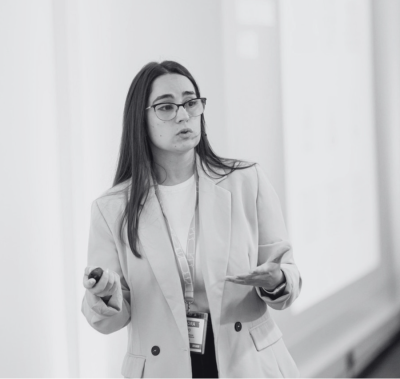



9:30 am - 10:00 am
EST
Why Voice AI is the future of the contact center
Chatbots are increasingly common and can handle more simple customer interactions relatively seamlessly, but they can fall short in times of stress when human empathy is required. With super-fast response times (down to the millisecond) and real-time context awareness, voice AI is emerging as the go-to solution for contact centers seeking to remove the frustration that can come with ineffectual chatbots during emotionally charged interactions.
Voice AI usage grew 9x in 2025, and production voice agent implementation was found to have increased by 340 percent across 500+ organizations. With voice interactions now priced at around $0.40, brands are increasingly keen to capitalize on this new, cheaper way to deliver immediate and empathetic support at scale with voice AI deployments. It is no surprise that voice AI is set to grow even more in the coming years.
In this session, we'll take a deep dive into the benefits of implementing voice AI in the contact center, drawing on real-world examples from brands at the forefront of the voice AI revolution. We'll explore potential deployment pitfalls and cover key topics around deployment including internal – and external – change management, governance and security and the long-term impact on customer loyalty.
Attendees will learn:
- How voice AI works in practice in your contact center, and what this means for demand planning.
- The human + AI approach that ensures efficiency, empathy and brand consistency during surge times.
- Key learnings from successful deployments and pitfalls to avoid
10:00 am - 10:30 am
EST
Governance says how, ethics asks whether: Inside Philips' responsible AI model
Ger Janssen -
Head of Responsible AI,
Philips
While most governance frameworks address who owns policies and which guardrails apply, few ask whether an AI use case should go ahead at all. At Philips, the Responsible AI Office does both, owning the governance framework while IT owns infrastructure and security owns security controls. The Office supports the Philips organizations towards compliance with the EU AI Act and runs, on request, ethics assessments on internal projects and external tools before they are purchased.
In this session, Ger Janssen, Head of the Responsible AI Office, joins us to cover the model in three parts: governance, ethics questions to ask when implementing AI and where to start with the EU AI Act. We'll also touch on how his team turns down a vendor tool without becoming known as a department of blockers.
Attendees will learn:
- How The three-way ownership split for AI governance works
- The questions Philips asks of third-party tools before buying
- The first steps towards AI Act readiness: inventory and risk tiering


10:30 am - 11:00 am
EST
Great CX in 2027 starts with the data you use today
Customer expectations are rising faster than most CX teams can adapt, and many leaders still run their teams on gut feel and lagging reports. The teams that stand out in 2027 will be the ones that turn their data into daily decisions starting now.
In this session, we'll look at what great CX will look like in 2027: AI-native, proactive, and built on relationships rather than transactions. Then we'll get practical about how to get there. You'll leave with a simple framework you can start using the following Monday.
CX and support leaders who want to move from reactive reporting to confident, data-driven management should attend this session.
Attendees will learn:
- You'll learn which metrics matter most (like response time, agent productivity, and CSAT)
- How to build a data rhythm for your team
- How to use AI to augment your agents with the right guardrails and human oversight
Sponsored by: Kustomer

11:00 am - 11:30 am
EST
Prove CX ROI to your CFO: 7 steps to win budget buy-in
Despite CX being a major differentiator for brands, many leaders find it hard to secure funding. The financial case is strong. PwC found that 73% of customers say CX is an important factor in purchasing decisions, and a great experience commands up to a 16% price premium. Forrester reports that in some industries, a one-point CX improvement can drive more than $1 billion in additional revenue, and that customer-obsessed companies grow revenue 41% faster. The problem is translation. CX teams report satisfaction scores. The CFO tracks lifetime value, churn and acquisition cost, often on a quarterly clock.
This session closes that gap. We'll walk through a seven-step framework for building a finance-friendly business case, from bringing Finance in on day one to putting a price on inaction when 59% of customers walk away after several bad experiences. You'll learn the five financial KPIs that make CX results land in the boardroom and a one-sentence formula for stating your ask in savings, revenue and cost. We'll also share how Washburn & McGoldrick sped up feedback analysis by 50%, cutting operating costs while delivering twice the value to clients in half the time. You'll leave with a business case you can take into your next budget meeting.
Attendees will learn:
- The five financial KPIs that translate CX into CFO language (customer lifetime value, acquisition cost, churn, retention and revenue per customer), backed by research showing great CX commands up to a 16% price premium.
- A seven-step framework and one-sentence formula for a CX business case that earns CFO buy-in, including how to quantify the cost of inaction when 59% of customers leave after several bad experiences.
- How to cut feedback analysis time by 50% and lower operating costs, with lessons from Washburn & McGoldrick, who now deliver twice the value to clients in half the time.
Sponsored by: Alchemer

11:30 am - 12:00 pm
EST
Stop doing what a machine can do: Leading your team through the AI revolution
As AI is introduced into more and more workflows, the loudest objection often comes from within: if AI is doing all of that, what is left for us? Twenty six years of transformation leadership across brands such as P&G and Unilver, plus board-level experience of restructures, has taught Christina Habib that the answer lies in leadership style, not in technology.
Acknowledging that people feel threatened and rebuilding teams around what machines can't do is her approach. Judgement, creative thinking and directing, rather than fearing, the tech, remains firmly in the human domain.
In this session, Habib will explain how she governs change from the front line and how she creates safety for teams to voice fears early. She'll also explain how she decides which skills and workflows are worth investing in, and how to decide what work should stay human, and what to automate.
Attendees will learn:
- How to build psychological safety within teams that lets them voice fears before they turn into hard resistance.
- A practical test for whether the skill you're training for will still be relevant in two years
- Why the front line should lead change rather than be led by it
12:00 pm - 12:30 pm
EST
Human in the Middle: The case for giving AI to your staff before your customers
Andrew Laudato -
COO,
The Vitamin Shoppe
Many AI roadmaps start by moving customers away from people. The Vitamin Shoppe is starting with its people. The retailer sells supplements, where a wrong answer carries more risk than it would for a T-shirt, and its brand rests on expert advice across more than 640 stores in the US. So its AI goes behind the counter and behind the agent's screen first. The tool helps a newer associate turn a customer's goal, such as building muscle or sleeping better, into a specific recommendation.
In this session, COO Andy Laudato explains where the company is happy to automate outright, where it keeps a human in the middle, and where there isn't a strong use case for AI at all.
Attendees will learn:
- Where The Vitamin Shoppe draws the line between full automation and AI-assisted human conversations, and why
- How the cost of a wrong answer, rather than the cost of a contact, can set your automation boundary
- How an associate-facing assistant narrows the knowledge gap between new hires and experienced staff